
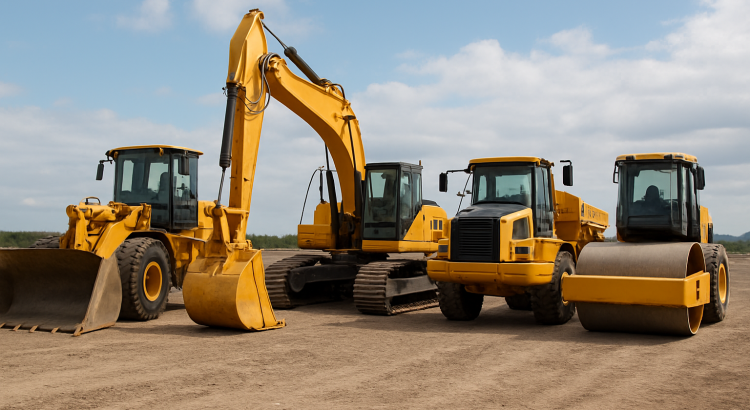
For building contractors, growth may provide an intriguing challenge. Increasing the size of a fleet is not always the best course of action, even while more projects, bigger contracts, and tighter timetables may indicate that it’s time to add machines. Costs, operating duties, storage needs, and maintenance commitments are all introduced with each additional piece of equipment.
Contents
- Look At The Work Pipeline First
- Calculate Productive Hours
- Consider More Than The Purchase Price
- Select Tools Based On Your Desired Work
- Think About Operators Before Adding Machines
- Grow With A Specific Goal
Therefore, fleet growth should be considered a business choice rather than just an equipment acquisition for a growing contractor. The objective is to install equipment that enhances the business’s capacity to finish lucrative projects without putting undue operational or financial strain on it.
Look At The Work Pipeline First
Additional equipment may appear necessary during a busy few months, but contractors need to discern between short-term job increases and long-term company expansion. A better picture may be obtained by examining confirmed projects, probable contracts, project types, and anticipated workloads.
For instance, it could make operational sense to have another excavator if comparable excavation operations are often coming up. Renting can still be the most sensible option if specialized equipment is needed for only one unique contract.
Contractors can determine which equipment should be prioritized by having a thorough understanding of the pipeline. Instead of just adding more equipment to the yard, expansion should take care of ongoing operating requirements.
Calculate Productive Hours
One of the best metrics for assessing fleet expansion is utilization. Contractors should assess the frequency of operation of their existing equipment and whether machine unavailability is causing delays in projects.
A machine that often switches between many operational locations might be a sign of actual capacity strain. On the other hand, scheduling rather than fleet size may be the issue if current equipment is left idle for extended periods of time.
Monitoring productive hours may help determine if adding more equipment will result in more billable work or just produce another underutilized asset.
Consider More Than The Purchase Price
The original cost is only one aspect of owning equipment. In addition, gasoline, maintenance, replacement parts, insurance, storage, shipping, inspections, and ultimate depreciation must all be taken into consideration by contractors.
Careful thought should also be given to financing. Even in slower times, monthly equipment costs should be affordable. If project traffic subsequently declines, a machine that was reasonably priced during a very busy season might become a financial strain.
Comparisons between buying, financing, leasing, and renting may be made much more significant by computing the projected cost per operating hour.
Select Tools Based On Your Desired Work
A construction company’s future course may also be supported by fleet planning. Contractors should think about the kind of work they wish to do in the next few years in addition to their present projects.
For example, a firm expanding into small urban building sites could need different equipment than a contractor seeking to go into major earthmoving operations. The expected workload should be reflected in the equipment’s specs, attachments, operational capacity, transportation needs, and adaptability.
Contractors may assess gear based on real-world task needs rather than just size, cost, or brand familiarity by working with an experienced construction equipment supplier.
Think About Operators Before Adding Machines
Without personnel capable of operating it safely and effectively, equipment cannot boost output. Contractors should ascertain if they currently have competent operators or whether hiring and training would be required before growing a fleet.
Additionally, technology that current teams have never utilized before may be introduced by modern machines. Workers must have the proper training in order to employ grade control systems, telematics, operator aid features, and digital monitoring tools, all of which may enhance performance.
Thus, labor availability should be taken into account in addition to equipment availability.
Grow With A Specific Goal
When each new piece of equipment has a clear operational or economic purpose, fleet expansion is most successful. Contractors should be aware of the issue the equipment will resolve, how often it will operate, how much it will cost to own, and how it will help with subsequent projects.
Although a bigger fleet may make it possible to handle more work and lessen reliance on borrowed equipment, size by itself does not increase a construction company’s capability. Instead of just adding additional assets, expanding contractors may create a fleet that supports sustainable growth with the use of careful utilization analysis, financial planning, staff preparedness, and maintenance forecasting.
At a Glance
- Fleet growth for contractors should be considered a business decision rather than a simple equipment acquisition.
- To determine whether to add equipment, contractors should examine their confirmed projects and forecasted workloads instead of reacting to short-term job increases.
- Utilization of existing equipment is a crucial metric for assessing the need for fleet expansion, focusing on productive hours and operational delays.
- The total cost of equipment ownership includes factors beyond the purchase price, such as maintenance, fuel, and insurance expenses.
- Contractors should align equipment choices with their future work intentions, considering the specific needs of upcoming projects.
- The availability of skilled operators must be assessed before acquiring new equipment, as effective operation is essential for maximizing productivity.