
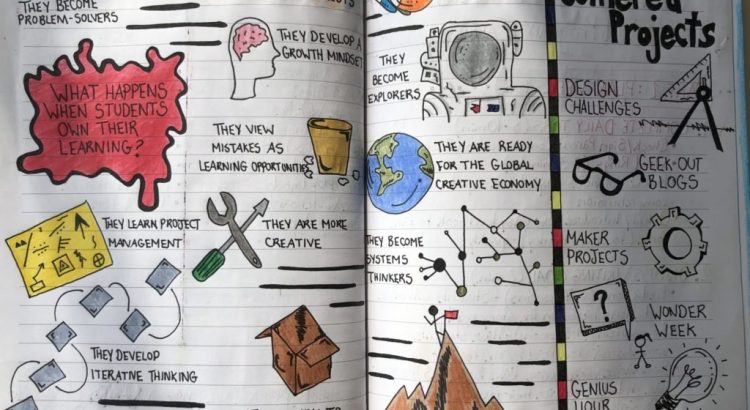
Many teachers believe that students should write pages of notes to remember lessons. At first, the idea of visual note taking may seem unusual because it encourages students to draw, use colors, and organize ideas with pictures instead of writing everything in long sentences. However, this learning method has become popular because it helps students understand lessons more clearly and remember information for a longer time. Even students who say they cannot draw can benefit from visual note taking because the goal is not to create perfect artwork but to make learning easier and more meaningful.
Visual note taking allows students to connect ideas using simple drawings, arrows, symbols, colors, and short notes. Instead of copying everything the teacher says, students think about the lesson, choose the most important ideas, and organize them in a way that makes sense to them. This active learning process helps improve focus, understanding, and memory.
Understanding Visual Note Taking and Why It Works
What Is Visual Note Taking?
Visual note taking is a way of recording information by combining words with visual elements. Instead of writing long paragraphs, students organize information using simple pictures, shapes, arrows, diagrams, icons, and colors. These visuals make notes easier to read and review later.
Visual notes can look different depending on the student. Some learners enjoy drawing simple illustrations, while others prefer using boxes, charts, mind maps, or graphic organizers. There is no single correct style. The most important goal is to organize information in a way that is easy to understand and remember.
Why Drawing Helps Students Remember
Research has shown that drawing while learning can improve memory. When students create visual notes, they use several parts of their brain at the same time.
First, they think about the meaning of the information. Then they create a picture or symbol to represent the idea. Finally, they use their hands to draw or write. These three learning actions work together, making it easier for students to remember what they have learned.
Instead of simply copying notes without thinking, students must understand the lesson first before deciding how to represent it visually. This process encourages deeper learning and better understanding.
A Teacher’s First Experience
Many teachers feel nervous about drawing in front of a class, especially if they believe they are not artistic. The first attempt may feel uncomfortable, but the results are often surprising.
Imagine drawing a simple diagram of a history lesson on the board. Even if the drawing is basic, students quickly begin copying it into their notebooks. Later, when they are asked questions about the lesson, they often remember the diagram more clearly than pages of written notes.
This shows that simple visuals can make learning more memorable than words alone.
Different Ways to Create Visual Notes
Visual note taking is flexible because students can choose the style that works best for them. Some common examples include:
- Mind maps that connect ideas with branches.
- Graphic organizers with short notes.
- Storyboards that explain events step by step.
- Notes with simple sketches beside important ideas.
- Color-coded notes that group similar information.
- Flowcharts that explain processes.
- Cornell notes combined with small drawings or symbols.
Students do not need advanced drawing skills. Even simple stick figures, arrows, circles, and icons can help explain ideas clearly.
How Teachers and Students Can Use Visual Note Taking Successfully
Anyone Can Learn Visual Note Taking
One of the biggest myths about visual note taking is that only artistic students can use it. This is not true. The purpose of visual notes is to improve understanding, not to create beautiful artwork.
Students who do not enjoy drawing can use shapes, symbols, labels, and simple diagrams instead. Teachers can also provide templates or partially completed organizers to help students get started. As students become more confident, they naturally develop their own note-taking style.
Using Visual Notes in the Classroom
Visual note taking can be used in almost every subject. Students can create visual summaries during science lessons, organize historical events in social studies, map story elements in literature, or explain math concepts using diagrams.
Teachers can also use visual note taking during classroom discussions, group work, review sessions, and project planning. It encourages students to think about connections between ideas instead of simply memorizing facts.
Many teachers also display visual notes on classroom walls so students can review important concepts throughout the school year.
Digital or Paper Notes
Students have two main choices when creating visual notes.
Digital note-taking apps allow students to draw, write, and organize information on tablets or computers. These tools are useful for online learning and make it easy to edit notes later.
Traditional pen and paper remain an excellent option because they are affordable, portable, and available to almost everyone. Many students also find that writing and drawing by hand helps them remember information better.
Both methods are effective, and the best choice depends on the student’s learning style and available resources.
Benefits Teachers Have Noticed
Many teachers report positive changes after introducing visual note taking into their classrooms.
Students become more involved in lessons because they actively organize information instead of copying it. Creative students enjoy expressing their ideas through drawings, while students who usually rely on written words learn new ways to think about information.
Teachers also notice that students often remember lessons more clearly during quizzes, class discussions, and exams. Since each student’s notes are unique, learners feel a stronger sense of ownership over their work.
Tips for Creating Better Visual Notes
Teachers who want to create their own visual note-taking materials should begin with the most important ideas in the lesson. Think about how each idea connects to the next and choose simple visuals that represent those relationships.
Helpful design ideas include:
- Use clear headings and titles.
- Group similar ideas together.
- Add arrows to show connections.
- Use different colors for different topics.
- Draw simple icons instead of detailed pictures.
- Leave enough space between ideas to keep notes easy to read.
- Highlight key words instead of writing long sentences.
Remember that simple visuals are often more effective than complicated drawings.
Final Thoughts
Visual note taking is much more than adding pictures to classroom notes. It is a learning strategy that helps students think more deeply, organize ideas clearly, and remember information more effectively. Whether students prefer colorful mind maps, simple diagrams, or basic symbols, visual notes encourage active learning and make studying more enjoyable.
The best part is that anyone can use visual note taking. You do not need to be an artist to create meaningful notes. With a little practice, both teachers and students can discover that simple drawings, organized layouts, and visual connections make learning easier, more engaging, and more memorable.