
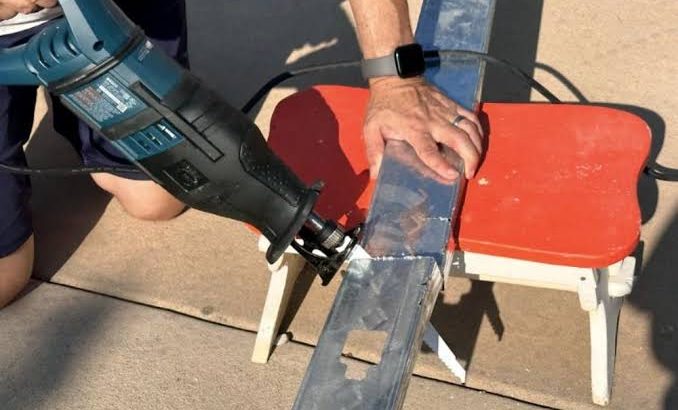
Demolition is not a delicate process. It demands tools that can take punishment, sustain performance, and handle whatever surprises a job site reveals. Old buildings hide nails in unexpected places, materials are layered in ways that weren’t documented, and access is frequently restricted to angles and spaces that weren’t designed for cutting. Reciprocating saws are built specifically for this environment—aggressive, adaptable, and capable of cutting through materials that would stop less versatile tools entirely.
Buying the right one requires understanding both the tool’s design principles and the demands of your specific work.
Why the Reciprocating Saw Dominates Demolition
The tool’s advantage in demolition contexts comes from several converging factors. The blade extends beyond the body of the saw, allowing access to areas unreachable by bulkier tools. The cutting motion generates enough force to work through layered or composite materials without requiring the clean entry point that a circular saw needs. And the variety of available blade types means the same tool body serves across an exceptional range of materials.
For contractors who need to remove old bathroom tile, cut through cast iron drain pipes, and then trim timber framing—all in the same project—a reciprocating saw with appropriate blade changes handles each task without requiring a separate tool.
Power Source Considerations for Heavy Demolition
Heavy demolition places consistent, sustained demand on a saw’s power system. This context generally favors corded models for extended, concentrated cutting work. The unlimited runtime and consistent power delivery of a mains-connected saw means the tool performs identically at the start of a long cutting session as it does at the end.
Cordless models, even those with high-capacity batteries, experience gradual power reduction as the battery depletes. For most tasks this is imperceptible, but in maximum-demand demolition scenarios—cutting through thick structural timber repeatedly—the difference can affect performance near the end of a battery’s charge cycle.
That said, the portability of cordless models makes them the practical choice in many demolition contexts where power access is limited. Modern high-voltage cordless platforms have closed the performance gap to a point where many professionals use them as their primary tool, keeping a spare battery charged at all times.
Understanding Blade Compatibility and Universality
One practical consideration often overlooked in pre-purchase research is blade system compatibility. Most reciprocating saws use a universal shank system that accepts blades from a wide range of manufacturers. This universality is commercially important because it means buyers aren’t locked into a single brand’s blade ecosystem.
Some manufacturers produce proprietary blade systems that offer specific performance advantages but limit compatibility. Before purchasing a saw with a proprietary system, evaluate whether the performance benefit justifies the reduced flexibility in blade sourcing.
Managing Blade Heat in Sustained Use
During sustained cutting—particularly through metal—blade heat buildup is a limiting factor. Hot blades lose their temper (the hardening process applied during manufacture), dulling faster and producing less effective cuts.
Practical management strategies include:
Pacing cuts: Allowing brief pauses during extended metal cutting lets the blade dissipate heat before continuing.
Cutting fluid: Applying a small amount of cutting fluid to metal-cutting blades significantly reduces heat buildup and extends blade life.
Blade rotation: Keeping multiple blades in rotation during heavy metal cutting distributes wear and heat across several blades rather than concentrating it on one.
These are professional practices that preserve blade life and maintain cutting performance across a full working day.
Footwear for the Saw: Shoe Design Details
The shoe design on a reciprocating saw deserves closer attention than buyers typically give it. Beyond basic adjustability—which allows repositioning as blades wear—the quality and rigidity of the shoe itself affects cutting control.
A shoe that flexes under cutting load creates inconsistent pressure against the work surface, causing the blade to bounce rather than cut smoothly. Rigid, reinforced shoes maintain consistent contact and allow the user to apply leverage effectively through the tool.
For flush-cutting applications—where the goal is to cut material as close to a surface as possible—saws with low-profile shoe designs and blade orientations that allow true flush positioning are preferable. Standard shoes with significant offset between the blade edge and the shoe edge make genuine flush cuts impossible.
Noise and Vibration in Enclosed Spaces
Demolition inside existing structures presents challenges that outdoor work doesn’t. Noise levels are amplified in enclosed rooms, and dust management becomes more critical. While reciprocating saws are inherently loud tools, models with better internal dampening tend to operate at lower decibel levels—a meaningful difference over the course of a full workday.
Hearing protection is non-negotiable during extended reciprocating saw use, regardless of the model. But selecting a lower-noise model reduces the fatigue associated with sustained loud environments and is more considerate of other trades working nearby.
Making Sense of Warranty and Support
A reciprocating saw used in professional settings is subject to significant wear. The manufacturer’s warranty terms and the availability of service support directly affect the tool’s total cost of ownership.
Look for:
Warranty duration: Longer warranties on professional-grade tools indicate manufacturer confidence in the product’s durability.
Service network: A manufacturer with accessible service centers reduces downtime when repairs are needed.
Parts availability: Common wear components—including internal drive parts and blade clamping mechanisms—should be readily available and reasonably priced.
Buying a well-supported tool from an established manufacturer is a risk management decision as much as a performance one.
Building the Right Setup Around Your Saw
A reciprocating saw is most effective as part of a coordinated toolkit. Pairing it with a quality blade selection, an adjustable workbench or sawhorses for material support, and appropriate personal protective equipment—safety glasses, gloves, hearing protection, and a dust mask—creates the conditions for both productive and safe cutting.
The blade selection, in particular, deserves the same consideration as the saw itself. A professional-grade saw paired with low-quality blades will underperform. Matching the blade specification precisely to the material being cut unlocks the saw’s full capability and produces the cleanest, fastest results.
Investing in both the right tool and the right supporting setup is the approach that produces consistently excellent outcomes across any demolition or renovation project.