
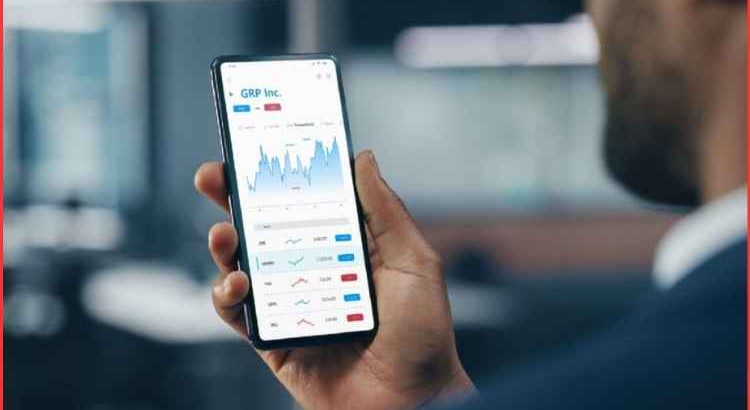
A Trading App can give investors and traders access to market data, research tools, order placement, portfolio tracking, alerts, and account information through a single digital interface. The technology can make market participation more convenient, but the quality of the outcome still depends on how the user analyses opportunities, manages risk, and makes decisions.
For long-term investors, the app can help organise research and monitor holdings. For active traders, it can support faster execution and price tracking. The same platform can therefore serve very different purposes depending on the user’s strategy, time horizon, and level of experience.
The Best Starting Point Is the User’s Objective
Before comparing features, decide what the app needs to do.
A long-term investor may prioritise:
- Company financials
- Portfolio tracking
- Watchlists
- Mutual fund access
- Corporate announcements
An active trader may care more about:
- Live market data
- Order speed
- Technical charts
- Derivatives
- Intraday tools
A feature-rich app is not automatically better if most of its tools are irrelevant to the user.
Research Tools Can Reduce Information Friction
One of the main benefits of a digital platform is access to information in one place.
A useful app may provide:
- Company financial statements
- Valuation ratios
- Historical price data
- Corporate announcements
- Sector comparisons
- News updates
This can reduce the need to switch between several platforms during the research process.
However, convenience should not replace verification.
Important financial information should still be checked against reliable sources.
Investing Requires More Than Watching Price Movement
For users focused on Investing, the strongest use of a trading app is often research and portfolio management rather than constant buying and selling.
Long-term decisions may depend on:
- Revenue growth
- Profitability
- Debt
- Cash flow
- Competitive position
- Valuation
Price charts can provide context, but they should not become the entire investment thesis.
A strong business purchased at an unreasonable valuation can still produce disappointing outcomes.
Watchlists Can Improve Decision Discipline
A watchlist allows users to monitor companies without buying them immediately.
This can help investors track:
- Earnings announcements
- Price changes
- Valuation levels
- Industry developments
- Corporate actions
Waiting can sometimes be more useful than acting immediately.
A watchlist creates space for further research and reduces pressure to buy simply because a stock is currently popular.
Order Types Change How Trades Are Executed
A Trading App may support different order types.
Market Orders
These generally prioritise execution at available market prices.
They can be useful when immediate execution is more important than exact price.
Limit Orders
These allow users to specify a preferred price.
The trade may not execute if the market never reaches that level.
Understanding this difference helps users control execution more effectively.
Liquidity Should Influence Order Decisions
Liquidity affects how easily a security can be bought or sold.
Highly liquid securities usually have:
- More buyers and sellers
- Narrower spreads
- Better order depth
Low-liquidity securities can experience:
- Wider spreads
- Slippage
- Sharp price changes
Users should therefore consider liquidity before placing large orders, especially in smaller companies.
Portfolio Tracking Should Show More Than Current Value
A useful trading app should help users understand the composition of their holdings.
Important portfolio information may include:
- Current value
- Purchase cost
- Profit or loss
- Allocation by stock
- Allocation by sector
This can reveal concentration risk.
For example, if one sector makes up a very large portion of the portfolio, the investor may be more exposed to industry-specific events than intended.
Alerts Can Be Helpful When They Have a Purpose
Price alerts, earnings notifications, and market updates can improve awareness.
However, too many alerts can encourage unnecessary activity.
A better approach is to use notifications for specific reasons, such as:
- Monitoring a target valuation
- Tracking an earnings date
- Watching a technical level
- Reviewing a major corporate announcement
The app should support the strategy rather than constantly interrupt it.
Charts Are Tools, Not Predictions
Technical charts can help users analyse:
- Trend direction
- Support and resistance
- Volume
- Momentum
They can be especially useful for shorter-term traders.
But charts do not guarantee future price movement.
Technical information should be interpreted together with risk management and market context.
Costs Need to Be Visible Before Trading
Trading involves more than the purchase price.
Possible costs may include:
- Brokerage
- Exchange charges
- Taxes
- Regulatory charges
- Other transaction costs
Frequent trading can make these expenses meaningful.
Users should understand the fee structure before placing regular trades.
Risk Controls Should Be Built Into the Process
A trading app can provide tools that support risk management.
These may include:
- Stop-loss orders
- Position tracking
- Margin information
- Exposure summaries
The tools are useful only when users apply them consistently.
Taking a very large position in one security can still create significant risk even if the platform provides advanced controls.
A Trading App Should Make Account Information Clear
Users should be able to access important account details easily.
These may include:
- Available funds
- Holdings
- Open orders
- Completed orders
- Transaction history
- Statements
Clear records make it easier to reconcile activity and monitor the portfolio.
They can also support tax and record-keeping requirements.
Security Should Be Treated as a Core Feature
A financial app handles sensitive account and personal information.
Users should expect measures such as:
- Secure login
- Two-factor authentication
- Device controls
- Session management
- Transaction verification
Users should also protect their own credentials.
Never share passwords, PINs, or one-time authentication codes with unknown people.
Customer Support Matters During Market Hours
Problems can occur at inconvenient times.
Examples include:
- Order issues
- Login problems
- Fund-transfer delays
- Account questions
A useful app should provide clear support channels.
Users should verify official contact information rather than relying on random phone numbers posted online.
The Interface Should Reduce Errors
Good design is not only about appearance.
A useful interface should make it difficult to confuse:
- Buy and sell
- Quantity and price
- Delivery and intraday
- Market and limit orders
Clear confirmation screens can help prevent accidental orders.
Users should always review the final details before submitting a transaction.
A Trading App Can Support Different Market Participants
The same platform may serve:
- Long-term investors
- Intraday traders
- Options traders
- ETF investors
- Mutual fund investors
This makes flexibility valuable.
But users do not need to use every available product.
Access to a complex instrument does not automatically mean it is appropriate for every investor.
Avoid Letting the App Encourage Overtrading
Easy access can sometimes create the temptation to trade more frequently.
Users may respond to:
- Short-term price swings
- Trending stocks
- Notifications
- Market rumours
Frequent activity can increase transaction costs and emotional decision-making.
A clear strategy can help prevent the platform from driving behaviour.
Digital Platforms Should Support Research, Not Replace It
A strong app combines convenience with useful information.
It should help users:
- Find data
- Compare securities
- Place orders
- Track holdings
- Review performance
But the final decision still belongs to the user.
The platform cannot determine personal goals, risk tolerance, or whether a particular investment is suitable.
Market Participation Should Match Financial Capacity
Investors should avoid using money required for:
- Emergency expenses
- Rent
- EMIs
- Medical costs
- Near-term financial goals
Market prices can move unexpectedly.
The amount invested should reflect the user’s ability to tolerate volatility and potential loss.
Stocks Need Individual Analysis
Before buying Stocks, users should review the underlying companies rather than relying only on rankings, trending lists, or recent price performance.
Useful areas include business quality, financial strength, valuation, industry conditions, management, and risk.
The Trading App can make this information easier to access, but thoughtful analysis remains essential.
Conclusion
A Trading App can improve market access by combining research, order execution, portfolio tracking, alerts, and account management in one interface.
Its real value depends on how well the user aligns those features with a clear strategy. Long-term investors may use it mainly for research and monitoring, while active traders may rely more heavily on execution tools and charts.
The app should make market participation more organised and transparent, but it should never replace financial planning, risk management, or independent decision-making.
FAQs
1. What should beginners look for in a Trading App?
Beginners can prioritise a simple interface, clear charges, reliable customer support, research tools, portfolio tracking, and strong security features.
2. Is a Trading App useful only for active traders?
No. Long-term investors can also use trading apps for research, watchlists, portfolio tracking, company information, and investment management.
3. Why are limit orders useful?
Limit orders allow users to specify the price at which they are willing to buy or sell. This provides more control, although execution is not guaranteed.
4. Can trading apps help with portfolio diversification?
They can provide portfolio allocation information and access to different securities, but diversification decisions still depend on the investor’s strategy and risk profile.
5. Does using a Trading App make investing less risky?
No. A trading app can provide tools and information, but market risk, company-specific risk, and investment losses still remain.